The Lawn Mower

It began, as these things often do, with an email. A notice from Ryobi: the yellow lawnmower—mine—was defective, potentially dangerous, and needed to be disabled. Not repaired. Disabled. I was instructed to follow a kind of surgical process to disable it—step-by-step, clinical, precise, as if performing a major operation on an explosive device.
They required photographic evidence of its demise. I obliged. The photos were acknowledged, then misplaced, then forgotten entirely, as though the digital ether had swallowed them in a fit of bureaucratic indigestion. Twice, I re-sent them, like offerings thrown into the void.
Then, nothing.
Then, suddenly: something.
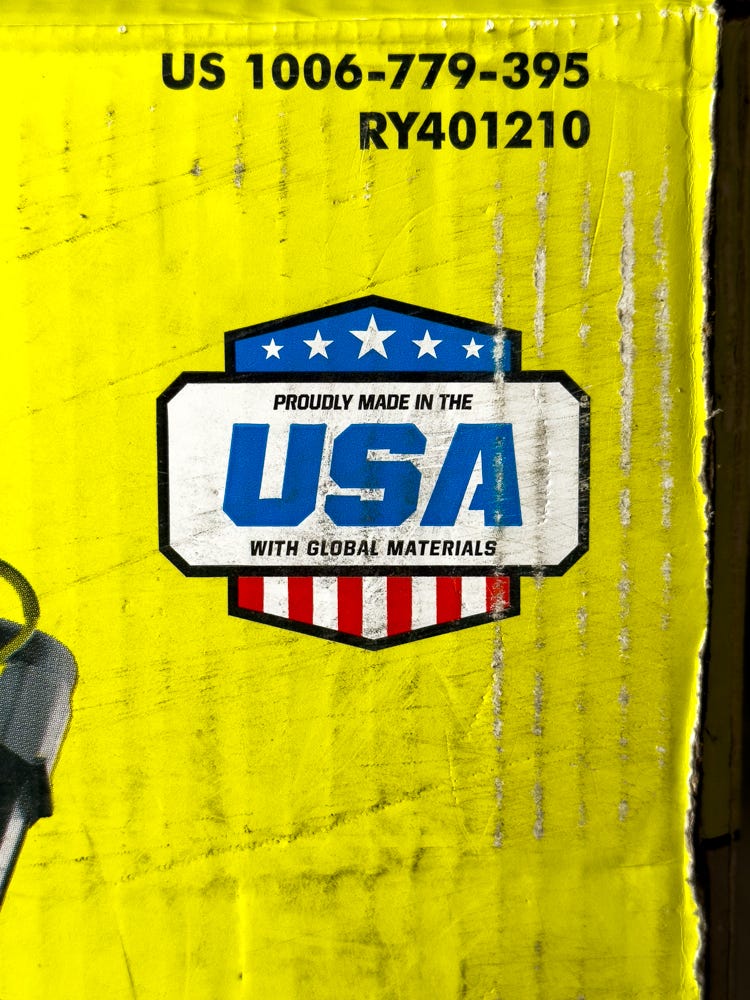
The box arrived without warning. A monolith on the driveway. It said, in confident uppercase letters: “PROUDLY MADE IN THE USA.” Just beneath, shyly written: “with global materials.” The pride was uppercase. The truth, lowercase. Parts from wherever parts are cheapest. Assembled by whoever still has hands.
In this case, there was no Canadian option—it was a replacement, not a purchase. Still, it brought to mind the dilemma: when there is no Canadian-product option do you buy American or Chinese? The choice is simple and damning: pretend the American version isn’t mostly Chinese, or stop pretending altogether. Regardless, as the lawn shortens, so does the illusion.